
HSBC India UPI Mobile Journeys

Designing Seamless, Secure, and Scalable UPI Experiences for Mobile X
Client: HSBC India
Platform: Mobile (Android & iOS)
Industry: Banking & Financial Services
Timeline: Ongoing
Role: Lead UI/UX Designer
Team: Product, Design, Engineering, Business, QA, Compliance
Executive Summary
HSBC India embarked on a strategic initiative to strengthen its UPI mobile journeys as part of the Mobile X ecosystem—addressing rising customer expectations for speed, reliability, and trust in real-time payments. The opportunity extended beyond usability improvements: it required orchestrating complex regulatory, technical, and experience layers into a single, seamless journey. As Lead UI/UX Designer, I drove the end-to-end experience strategy, aligned multiple stakeholders across product and engineering, and ensured UPI journeys met enterprise-grade standards for scalability, accessibility, and compliance—while significantly improving customer confidence and transaction clarity.
Business Problem & Market Context
Core Business Challenge
UPI had rapidly become a primary payment method in India. However, existing journeys across onboarding, linking accounts, authentication, and transaction states were introduced:
- Inconsistent flows across Android and iOS
- Cognitive overload during critical payment moments
- Limited visibility into transaction states and failures
- Increased dependency on customer support for recoverable errors
User & Operational Pain Points
- Unclear success, pending, and failure states
- Trust erosion during high-value or time-sensitive payments
- Repeated authentication friction
- Support teams lack actionable context during disputes
Constraints
- RBI and NPCI regulatory guidelines
- Strong security and compliance requirements
- Legacy service dependencies and backend constraints
- Need for parity with evolving UPI ecosystem standards

Why It Mattered:
UPI is not just a feature—it is a daily habit. Any friction directly impacts adoption, trust, and long-term customer retention.
UX Strategy & Design Vision
Experience Vision
Create a predictable, transparent, and confidence-building UPI experience that feels effortless for customers while remaining robust for enterprise operations.
Strategic Principles
- Clarity over cleverness at every transactional moment
- Fail safely, recover gracefully
- Consistency across journeys and platforms
- Compliance-by-design, not as an afterthought
Strategy Alignment
- Reduce cognitive load during payments
- Improve transaction state visibility
- Standardise flows using Mobile X design foundations
- Enable faster decision-making for both users and support teams
Success Metrics
- Reduced transaction drop-offs
- Improved success-state comprehension
- Lower UPI-related support tickets
- Increased user trust and repeat usage
User Research & Insights
Research Inputs
Primary research was conducted by HSBC internal research teams and shared across pods. I actively leveraged:
- User interviews and usability test reports
- Analytics dashboards and funnel data
- Heuristic audits and competitive benchmarks
- Product owner insights from market rollouts
Key User Segments
- Daily UPI users (peer-to-peer payments)
- Bill pay and merchant payment users
- High-value transaction customers
Critical Insights
- Users mentally anchor on status confirmation, not speed alone
- Ambiguous system messages caused repeated actions and distrust
- Users preferred progressive disclosure over dense information
- Authentication fatigue increased abandonment during retries
These insights directly shaped flow simplification, messaging hierarchy, and error recovery design.
Experience Architecture & Journey Design
Journey Mapping Highlights
- Account linking and UPI setup
- Pay / Collect flows
- Authentication and confirmation
- Pending, failed, and reversal states
Key Design Decisions
- Introduced clear transaction lifecycle states
- Simplified information architecture for critical actions
- Reduced steps where regulatory constraints allowed
- Standardised micro-interactions for trust reinforcement
Trade-offs
Some backend constraints limited real-time feedback. Where instant resolution wasn’t possible, I designed transparent holding states to preserve trust and reduce anxiety.

Design Execution
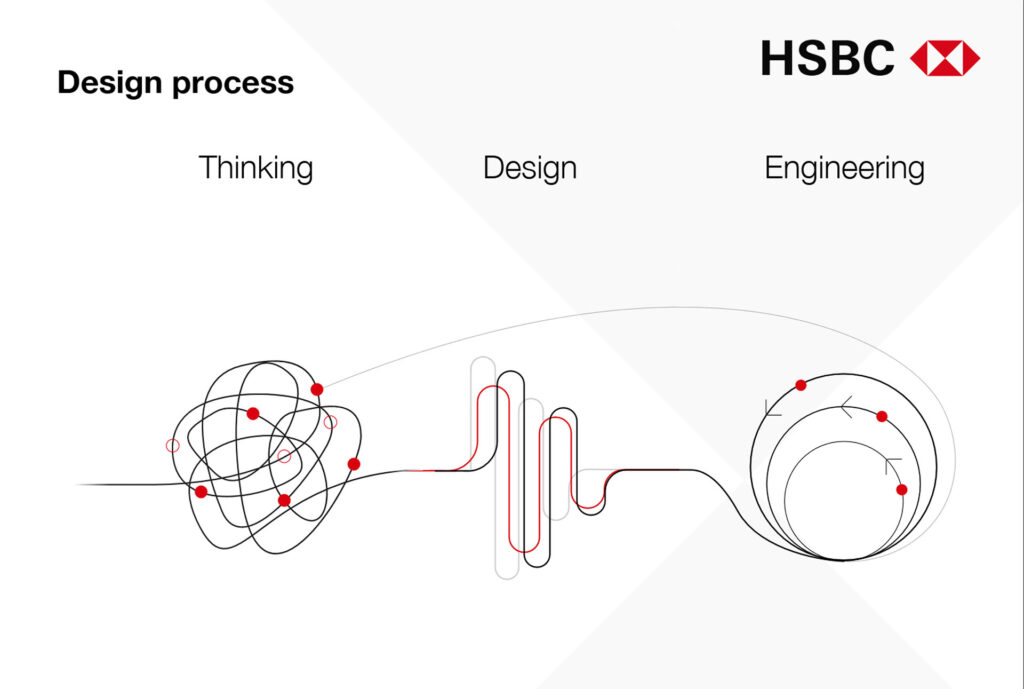
Interaction & Visual Design
- Leveraged the HSBC Mobile X design system and components
- Applied hierarchy-driven layouts for quick scanning
- Focused on thumb-friendly interaction zones
Design System Usage
- Reused and extended existing components
- Ensured cross-platform parity
- Maintained strict adherence to brand and accessibility standards
Collaboration
Worked closely with:
- Product Owners for scope and prioritisation
- Engineering teams for feasibility and handoffs
- QA for edge-case validation
- Business and compliance for regulatory alignment
Accessibility & Scale
- WCAG-aligned contrast and typography
- Clear iconography for low-literacy scenarios
- Designed flows to scale across future UPI features
Validation & Iteration
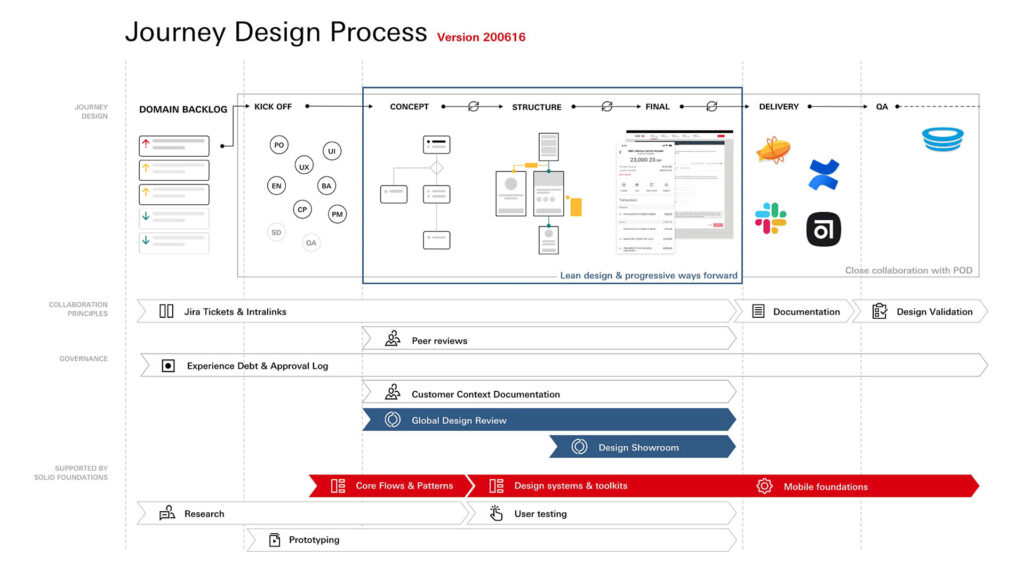
Validation Approach
- Iterative usability feedback via internal reviews
- Cross-functional design walkthroughs
- Design QA against real transaction scenarios
Iteration Cycles
- Continuous refinement of copy, states, and transitions
- Adjustments based on regulatory clarifications
- Risk mitigation through early stakeholder reviews
Business Impact & Measurable Outcomes
Quantitative Outcomes
(directional due to confidentiality)
- Reduced UPI journey drop-offs
- Improved transaction success comprehension
- Lower repeat attempts and support escalations
- Faster internal approval cycles due to clearer flows
Qualitative Outcomes
- Increased stakeholder confidence in design maturity
- Stronger alignment between business, tech, and design
- Improved customer trust during high-risk transactions
UX became a decision-making enabler, not just a delivery function.
Leadership & Influence
As Lead UX Designer, I:
- Drove alignment across multiple pods and stakeholders
- Presented UPI journeys to internal design juries for final approvals
- Influenced prioritisation through evidence-based design rationale
- Mentored designers on enterprise UX standards
- Ensured design integrity under tight regulatory and technical constraints
Challenges & Trade-offs
- Balancing simplicity with compliance complexity
- Designing for partial system failures
- Managing dependencies across distributed teams
- Making informed compromises without eroding user trust
Complexity was managed through clear documentation, strong governance, and decisive UX leadership.
Key Learnings & Reflection
What Worked Well
- Strong design governance frameworks
- Early stakeholder involvement
- Clear success metrics beyond UI polish
What I’d Improve
- Earlier customer validation for edge cases
- More automated analytics feedback loops post-launch
Leadership Growth
This project reinforced my belief that great enterprise UX is about orchestration, not screens—balancing business risk, human behaviour, and system realities.